Anyone who has poured honey, oil, or another thick product knows that not every liquid moves the same way. In a production environment, those differences can affect filling speed and consistency from one container to the next. This complete guide to viscous liquid filling machines explains the main factors that influence filling performance. A well-planned filling process can reduce common production issues.
How Viscosity Affects FillingViscosity describes a liquid’s resistance to flow, and that resistance plays a major role in how a product behaves during filling. A slow-moving product may require different pumps, nozzles, fill speeds, or pressure settings than a thinner liquid. As viscosity changes, fill time and product cutoff can change as well. These factors can affect throughput and consistency.
Temperature ChangesTemperature can change a product’s viscosity and affect how consistently it moves through the filling system. Warmer conditions may make some products flow more easily, while cooler temperatures can make them thicker and slower to dispense. These changes can influence fill time, nozzle performance, and overall consistency. Operators may need to adjust machine settings when product temperature changes during production.
Foaming, Dripping, and StringingSome viscous products can foam during filling or continue to drip or string after the fill cycle ends. These behaviors can affect fill accuracy and leave residue around the container opening or filling area. Matching the equipment settings, such as nozzle movement, to the product’s behavior can improve cleanliness and consistency.
Product Composition and FormulationProduct composition can also affect how a liquid moves through pumps, valves, and nozzles. Suspended solids or particulates may require equipment that can maintain steady flow without restricting or damaging the product.
Choosing a Filling Method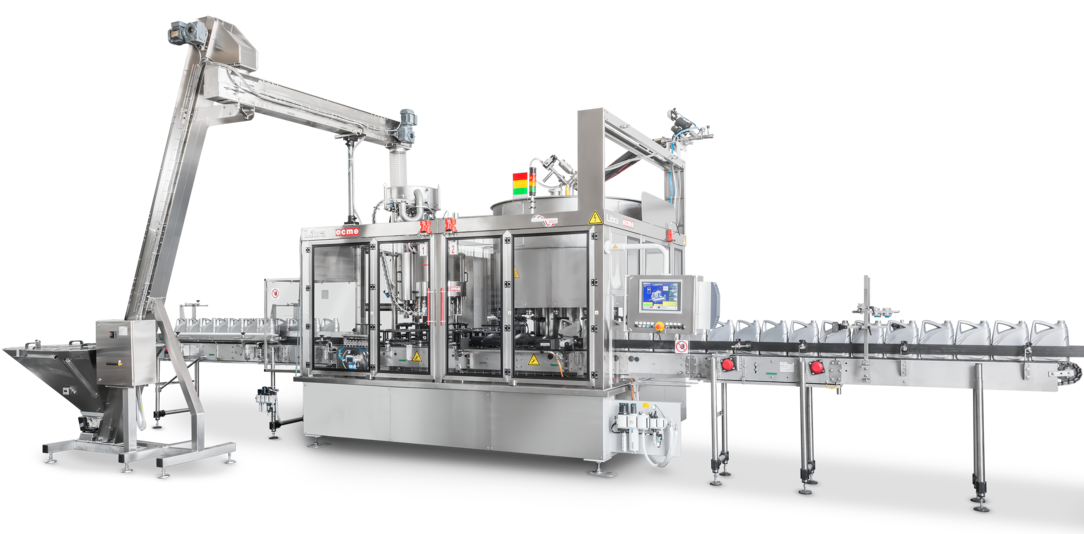
Different filling methods measure and dispense product in different ways, so the best option depends on the product, package, production speed, and accuracy needs. Thick liquids often require controlled pumping or mechanical movement instead of relying mainly on gravity. A viscous liquid filling machine maintains consistent fill quantities at required production speeds.
Rotary Weight FillingRotary weight filling moves containers through a rotating filling system, filling each container to a target weight. The machine uses weighing technology to measure the amount of product added rather than relying only on volume. This makes the process less sensitive to changes in product temperature, viscosity, or trapped air. OCME USA’s LIBRA R uses rotary weight filling to deliver accurate fills across a range of container sizes.
In-Line Weight FillingIn-line weight filling moves containers through a straight-line system and fills them based on measured weight. The Libra LT is designed for larger containers such as drums and kegs, where accurate dosing is especially important. It uses our exclusive CPFP (Control Pressure Fine Phase) system for high-speed, high-accuracy filling of large containers.
Matching Nozzles to Product BehaviorThe nozzle is the last point of control before the product enters the container. Diameter, opening style, shutoff mechanism, and positioning all influence how a thick liquid flows into the package. When the nozzle isn’t well matched to the product, you may get slower cycles, messy container surfaces, or inconsistent cutoff.
The end of the fill is especially important for products that tend to drip, stretch, or foam. In these cases, nozzle geometry and movement may need to be adjusted along with fill speed. These changes can improve cutoff and reduce cleanup without requiring a different filling method altogether.
Bottom FillingBottom filling lowers the nozzle into the container before or during the fill, then raises it as the product level increases. This gives the machine more control over how the liquid enters the container. For products that foam or splash easily, filling closer to the bottom can reduce turbulence during dispensing. It can also make the fill process cleaner and more controlled for certain large-container applications.
Container and Package Considerations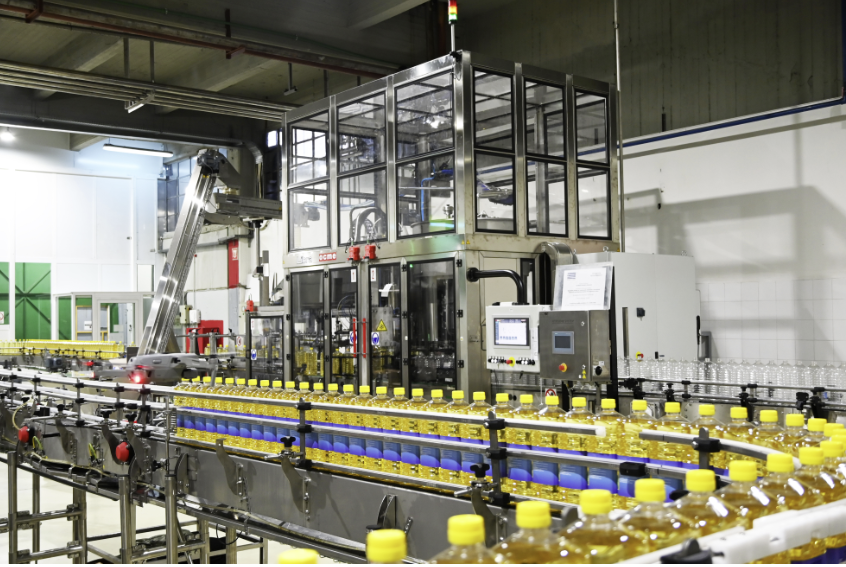
A filling system must work with the package as reliably as it works with the product. Container opening size and shape can affect nozzle selection and positioning, while material and rigidity can influence how the package behaves during filling. Even when the product stays the same, a new container format may require different machine settings or handling components.
Container stability also becomes important when packages are lightweight, unusually shaped, or narrow at the base. Guides, indexing systems, and related components need to keep each container properly positioned as it moves through the filler. Facilities that run several package sizes should consider how much adjustment or hardware changes will be required between formats.
Cleaning and Product ChangeoversWhen filling sticky products or multiple formulations, consider cleaning needs during equipment planning. Product residue may remain in tanks, pumps, hoses, valves, and nozzles if these components are hard to reach or drain completely. Equipment design can make routine cleaning faster and support more consistent sanitation practices.
Product changeovers bring another set of practical considerations. Switching formulations may require flushing product-contact parts, changing machine settings, adjusting container handling, or replacing format-specific components. Review these steps during equipment selection to identify where downtime may recur and how much operator involvement each changeover will require.
Integrating Filling With Packaging EquipmentA filler is only one part of the packaging line, so evaluate its performance in relation to the surrounding equipment. Upstream and downstream processes need compatible speeds and predictable product flow to keep production moving smoothly. If the filler runs significantly faster or slower than surrounding equipment, the line may experience accumulation, frequent stops, or unused capacity.
If one part of the line stops, the rest of the equipment needs to respond smoothly. Coordinated controls can adjust machine speeds and share line conditions so production doesn’t continue out of sync. Looking at the entire line makes it easier to spot bottlenecks and keep products moving consistently from one stage to the next.
As this guide shows, viscous liquid filling machines perform best when businesses look at the entire filling process as one connected system. The product, container, filling method, and surrounding equipment all influence one another during production. Considering the full process can lead to more consistent filling and easier day-to-day operation. Whether you need a new filling system or want to improve an existing line, OCME USA can provide solutions built around your production needs.