In food manufacturing, raw line speed means nothing if it compromises hygiene. End-of-line operations must simultaneously support packaging consistency and cleaner handling to meet production targets and sanitation standards.
These demands can become harder to manage as output increases. Even when upstream production is running efficiently, momentum can stall when packing and palletizing cannot keep up.
Automated packaging systems help improve stability during these final stages. By establishing reliable, repeatable end-of-line workflows, this technology allows operations to achieve higher throughputs while preserving food safety and packaging quality.
Why Speed and Hygiene Have To Work Together in Food Manufacturing
On a high-throughput line, speed is only valuable when matched by absolute control. As output increases, the end of the line has to do more than to simply keep pace. It has to move products smoothly without introducing more variation or creating new points of slowdown.
Maintaining hygiene adds another level of complexity to the operation. Every unnecessary manual touchpoint can increase contamination risk, especially when products are moving quickly through packaging, stacking, and palletizing operations.
Reducing Manual Handling Supports Cleaner, More Controlled Operations
One of the most effective ways to create a more controlled end-of-line operation is to reduce how often products and packages need to be handled manually.
With food packaging automation, fewer tasks rely on manual touchpoints, making it easier to maintain cleaner processes.
Fewer Touchpoints Mean Cleaner Product Movement
Less direct contact with products and packages helps reduce handling-related contamination. It also creates a more predictable flow from packing to load preparation.
Hygienic Design Helps Simplify Sanitation
Many packaging automation solutions for food environments use 304 or 316 stainless steel, polished non-porous surfaces and continuous welds, making equipment easier to clean.
Washdown-Ready Construction Supports Reliable Operations
Food-grade motors and components are often built to withstand moisture, cleaning chemicals, and repeated wash cycles. This can help reduce corrosion-related failures and make it easier to get the line back up and running after sanitation.
Integrated Automation Improves Throughput and Consistency Without Creating New Bottlenecks
The upstream process often sets the pace for everything that follows in high-volume manufacturing. Consequently, downstream equipment must keep up without starving, overloading, or creating backups that disrupt product flow.
Through packaging line automation, food manufacturers can connect key processes to ensure products move more smoothly:
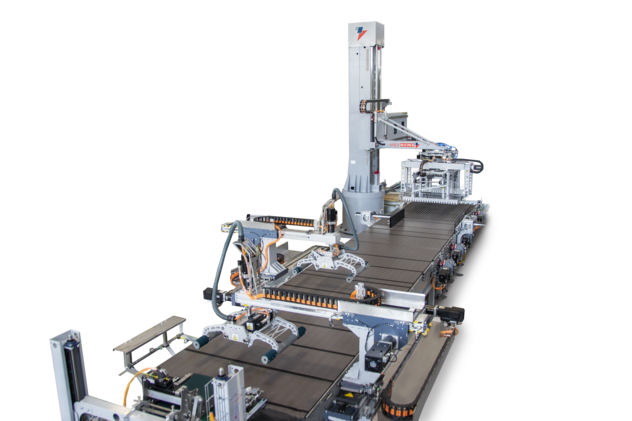
- Case packing, so products are loaded accurately and prepared for the next stage without unnecessary delays
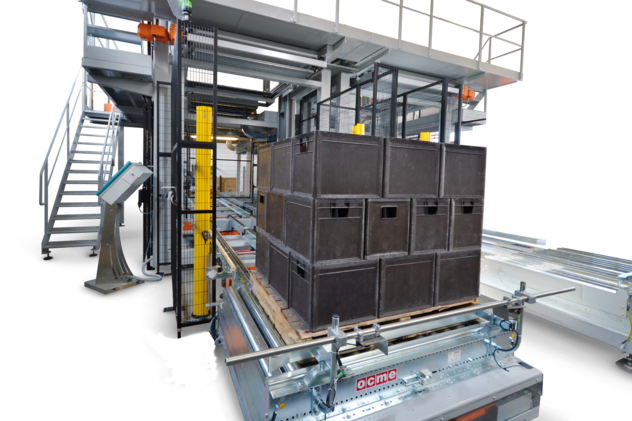
- Palletizing automation, so loads are built in consistent patterns that support stability
- Wrapping, so finished pallets are secured efficiently for storage and distribution
- Conveying, so product flow stays smooth between machines and reduces manual transfer.
When these components are not aligned, even a small stop can ripple across the line. A coordinated line design helps absorb those interruptions and restore flow faster.
Flexibility Matters When Formats, SKUs, and Production Demands Change
Strong end-of-line performance in food manufacturing also depends on how well the system handles change without disrupting the flow you worked to build.
Rigid equipment can slow changeovers and push more work back onto operators. Pressure can then build quickly when lines have to manage multiple SKUs, shorter runs, or retailer-specific packaging requirements, especially when the system is not designed to adapt efficiently.
Managing Multiple Packaging Formats
A flexible food packaging automation strategy helps the end of the line adjust to different packaging needs without relying on manual workarounds.
Automated case packing can support a range of formats, including:
- Cartons
- Trays
- Shrink film bundles
- Shelf-ready packaging
- Different container types and pack counts
Flexible systems are especially valuable in segments like dairy, frozen foods, sauces, preserved foods, edible oils, pet food, and dry goods. Each category can bring different pack styles, handling needs, and production demands, so adaptable automation helps the line respond without giving up accuracy or consistency.
Long-Term Performance Depends on the Right Partner, Not Just the Right Machine
Choosing the right equipment matters, but long-term results depend just as much on the team behind it.
In food manufacturing, you need a provider that can align the system with your operation and continue supporting it well beyond installation.
When evaluating an equipment partner, look for:
- Tailored System Design: The ideal provider configures the solution around your products, line layout, throughput targets, and sanitation requirements, rather than forcing your operation into a standard setup.
- Round-the-Clock Support: Reliable technical support should be available when urgent issues arise, so downtime does not last longer than necessary.
- On-Site Assistance: Hands-on help during installation, startup, troubleshooting, and service can make implementation smoother and ongoing support more effective.
- Training: Your operators and maintenance teams should receive practical guidance that helps them run the system confidently and maintain performance over time.
- Lifecycle Partnership: Long-term value often comes from ongoing support that can adapt as production needs change.
OCME USA is built around these priorities. We offer a broad line of innovative end-of-line solutions, configurable to your specific operating demands.
Backed by OCME and Aetna Group, we provide the resources and innovation of a large international organization while delivering focused support for North American operations.
Build a More Reliable Food Packaging Operation With OCME USA
Automated packaging systems help reduce manual contact and support hygiene, all while managing format or SKU changes without disrupting flow.
Automation also puts food manufacturers in a stronger position to protect throughput. Greater flexibility, better flow, and more repeatable handling all contribute to a packaging process that is more reliable, day after day.
If you want to bring these advantages to your own production line, explore the latest food packaging innovations from OCME USA. As the North American subsidiary of OCME, we combine an extensive portfolio of industry solutions with extensive experience to help you find a system that matches your requirements.
Request a quick quote online or call us at 678-473-7896 for more information. You can also explore our blog for more helpful resources on advanced packaging and logistics.