A facility that palletizes thousands of identical cases every hour has very different equipment needs than one that regularly switches between products, package sizes, and stacking patterns. Traditional palletizers often suit consistent, high-volume production, while robotic systems offer greater flexibility for varied handling requirements. But choosing between traditional and robotic palletizers isn't just about speed or versatility. Maintenance demands, floor space, and operating costs also influence which system makes sense. Understanding these differences can help manufacturers choose the technology that fits their production environment.
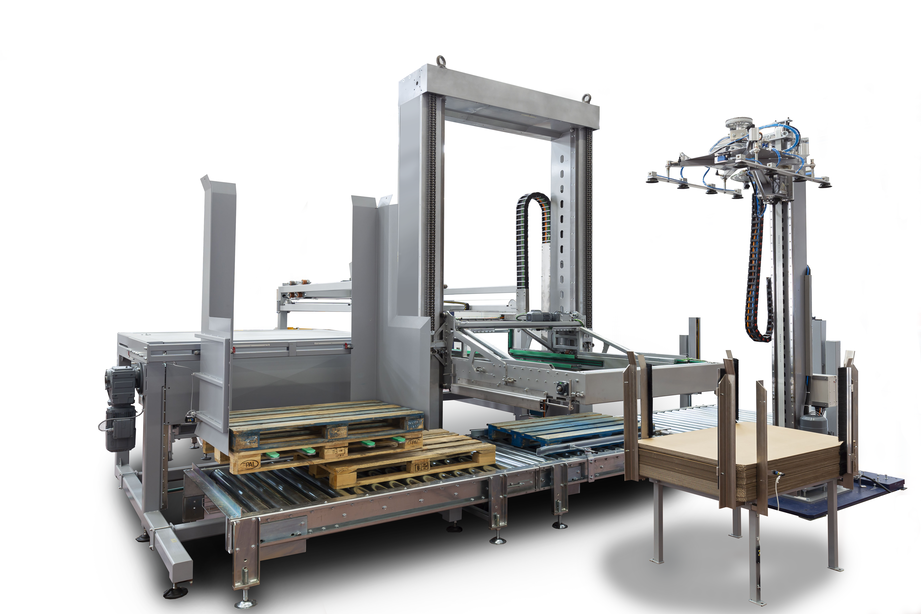
How Traditional Palletizers WorkTraditional palletizers use mechanical systems to organize products into rows or complete layers before stacking them onto a pallet. Conveyors move incoming packages into position, where turning devices, pushers, or other mechanisms arrange them according to a predetermined pattern. After forming a layer, the machine transfers it onto the pallet and repeats the process until the load reaches its required height.
This method works particularly well for operations that process large quantities of similar products at consistent speeds. By forming and transferring complete layers, traditional palletizers can maintain high throughput without handling every package individually. However, the equipment's mechanical design may limit how easily operators can accommodate changes in product dimensions or stacking requirements.
Types of Traditional Palletizing SystemsTraditional palletizers are commonly classified as high-level or low-level infeed systems based on where products enter the machine. High-level palletizers receive products at an elevated position and are often used in high-speed environments where continuous layer formation is required. Low-level palletizers receive products closer to the floor, which can make certain components more accessible for operation and maintenance. Manufacturers can also choose between different infeed arrangements, including in-line and 90-degree configurations, depending on their conveyor layout and available space.
How Robotic Palletizers Work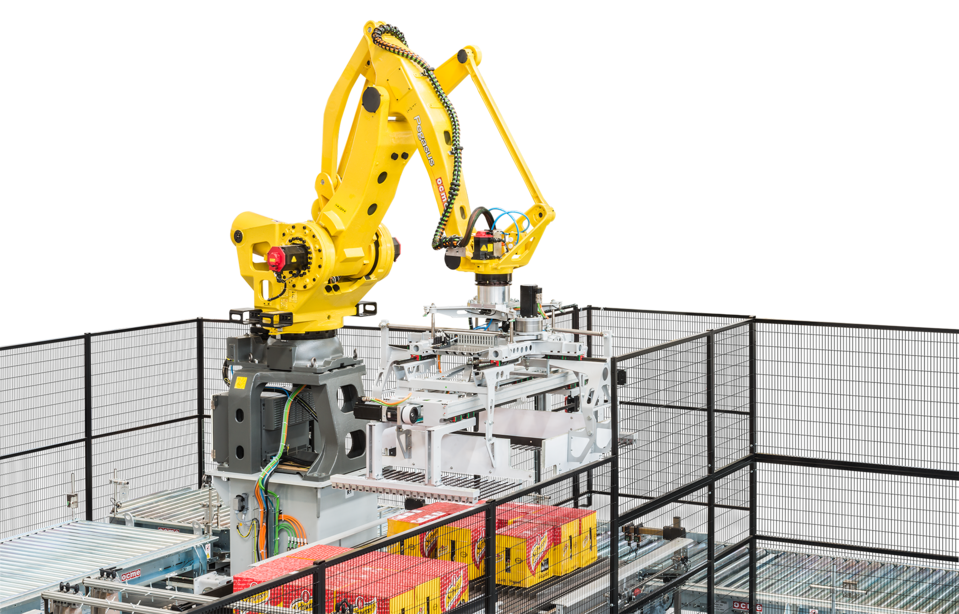
Robotic palletizers use programmable arms to pick up products and arrange them into specified stacking patterns. The arm moves between the product infeed area and the pallet, placing individual packages, rows, or complete layers depending on the equipment configuration. A programmed sequence controls these movements to maintain accurate positioning throughout the palletizing process.
Unlike conventional mechanical systems, robotic palletizers can often accommodate different handling requirements by adjusting their programming and gripping equipment. Certain configurations can also serve multiple pallet positions or receive products from more than one production line. This makes robotic technology particularly useful when a facility needs to handle varied packaging formats within the same operating area.
Gripper Options for Different ProductsThe gripper, also known as end-of-arm tooling, determines how a robotic palletizer picks up and releases products. Mechanical grippers can handle cases, containers, or full rows. Vacuum grippers may suit packages with surfaces that allow reliable suction. Specialized tooling is also available for products such as drums and pails that require specific handling methods. The best option depends on the product's weight and dimensions and how many items the robot needs to move during each cycle.
Comparing Speed and Production CapacityThroughput is often one of the first considerations when comparing these palletizing technologies. Traditional layer-forming equipment can achieve high production rates by arranging and transferring multiple packages at once. Robotic systems vary in speed based on their design and handling capabilities. Some robotic configurations can also transfer complete layers, so it's important to compare actual equipment performance rather than assume one technology is always faster.
Manufacturers should consider how the following operating conditions influence throughput:
- Shorter cycle times allow the system to complete operations more quickly.
- Handling products in complete layers rather than individually can increase the number of packages moved during each cycle.
- Product dimensions and stability can affect how quickly packages can be moved and stacked.
- Higher production volumes require equipment that can consistently process the necessary number of cases or layers.
- Frequent changes between products or pallet patterns can reduce throughput if the system requires lengthy changeovers.
- Efficient coordination with upstream conveyors and downstream equipment keeps products moving and minimizes interruptions.
Not every production facility handles the same products throughout the day. Traditional palletizers can accommodate different package sizes and stacking arrangements, although some changes require mechanical adjustments or modifications to the layer-forming process. Robotic palletizers use programmable movements and interchangeable gripping equipment, so they can handle different products with fewer mechanical changes.
When choosing between traditional and robotic palletizers, consider how often your facility changes products and whether those changes affect palletizing requirements. A conventional system may be a practical choice for a line that processes uniform cases under consistent operating conditions. Facilities with more varied packaging needs may benefit from robotic equipment.
Integrating With End-of-Line EquipmentAlso look beyond the palletizer itself and consider how it will work with other end-of-line equipment. For example, the system may need to coordinate with conveyors and automated pallet transport equipment to maintain an efficient material flow. Future production plans can further clarify whether the facility would benefit from additional capacity or more flexible handling capabilities.
Equipment Costs and Maintenance ConsiderationsThe cost of a palletizing system goes beyond the purchase price. Traditional palletizers may have numerous mechanical components that require regular inspection and adjustment, while robotic systems rely on specialized components such as robotic joints and controllers. Several expenses contribute to the total cost of owning and operating a palletizing system.
When comparing traditional and robotic equipment, manufacturers should consider the following costs:
- The initial investment includes the equipment purchase price, control systems, safety features, and necessary accessories.
- Installation costs may increase if the facility requires layout modifications or integration with existing machinery.
- Energy consumption varies depending on the equipment's power requirements and how frequently it operates.
- Ongoing maintenance expenses include preventive servicing, replacement parts, and specialized technical support.
- Labor costs depend on the staffing needed to monitor equipment and manage product changeovers.
- Planned maintenance and unexpected equipment failures can lead to downtime that interrupts production and increases operating expenses.
A palletizer that performs well on one production line may create bottlenecks on another, depending on the facility's specific requirements. Traditional systems often work well in high-volume operations, while robotic palletizers offer greater flexibility for more complex applications. By balancing production performance with long-term costs and flexibility, manufacturers can select equipment that meets their needs today and remains practical as operations evolve.